
The Mauseloum of Mahmud II
Sultan II. Mahmut Türbesi, Molla Fenari, Fatih/İstanbul, Türkiye
As you walk along Divanyolu, the Mausoleum of Mahmud II may at first glance seem like a quieter stop among Istanbul’s grand monuments. Yet it is one of the city’s most significant structures for understanding how the Ottoman Empire began to change in the 19th century.
Mahmud II was one of the great transformative rulers in Ottoman history. Mahmud II was a revolutionary sultan who rebuilt the army to European standards and succeeded in abolishing the 500-year-old Janissary Corps.
He reorganized central administration and began modernizing state institutions, drawing inspiration from European models. He was even nicknamed the “infidel” sultan for making it mandatory to wear pants in government offices.
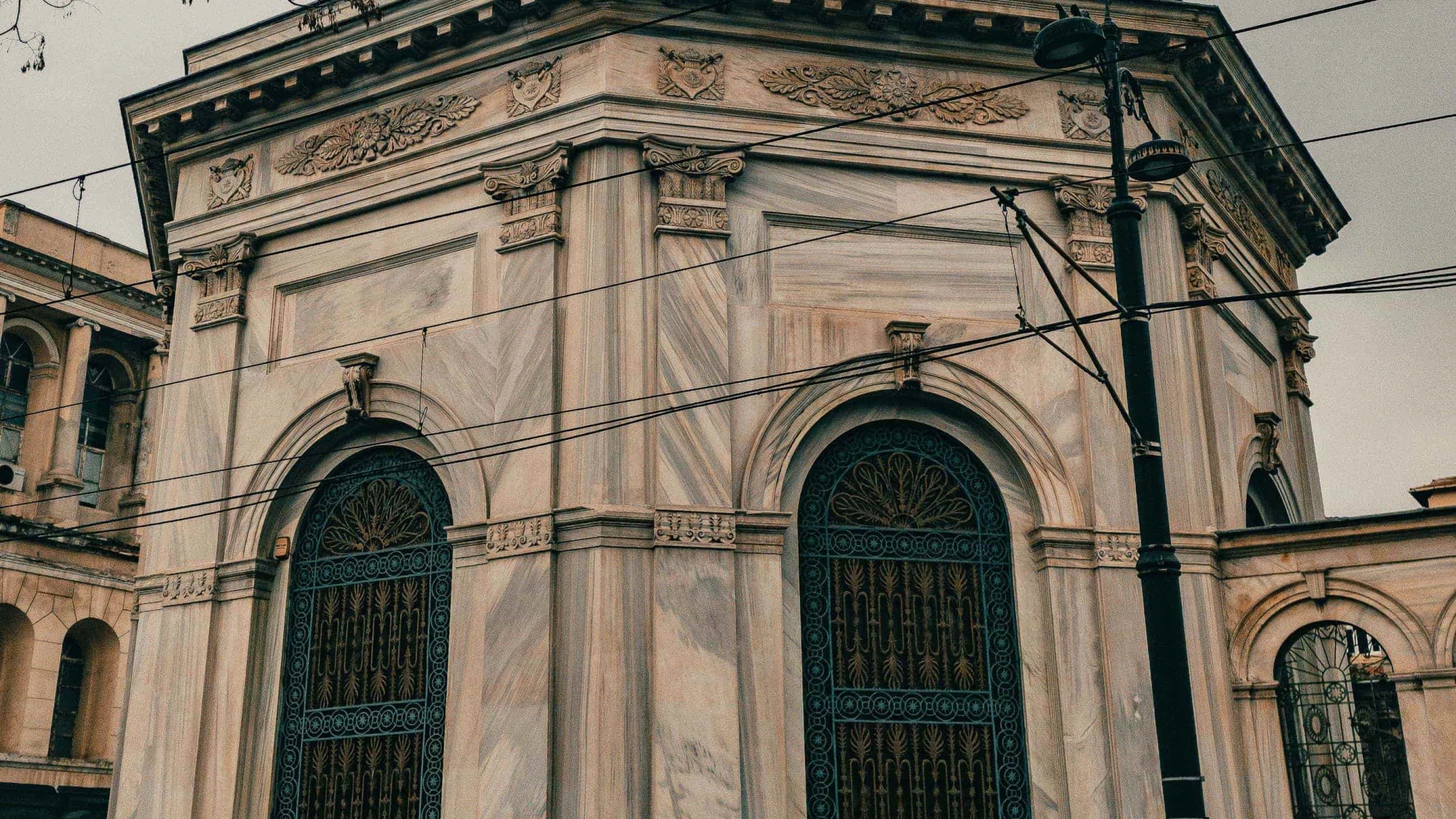
This structure, in addition to serving as a mausoleum, represents an architectural shift from the Classical Ottoman period toward a new Ottoman style seeking to align with Europe. The most distinctive feature that sets the Mausoleum of Mahmud II apart from other classical Ottoman buildings in Istanbul is that it was built in the Empire style. With its octagonal plan, marble facade, high-arched windows, Corinthian-style capital columns, and large dome, the structure presents a look quite different from 16th-century Ottoman architecture.
Inside, you can see the tomb of Mahmud II, as well as those of Sultan Abdülaziz and Abdülhamid II. Thus, within a single mausoleum, you come into contact with a significant part of the Ottoman Empire’s 19th-century history. In the cemetery surrounding the mausoleum, there are numerous gravestones belonging to statesmen, writers, and leading figures of the era.
Understanding a few Ottoman concepts will make your visit more meaningful. Inside of mausoleum, there are large and cloth-covered structures called “sandukas”; these are not actual coffins but structures that symbolically represent the graves below. The small cemetery surrounding the mausoleum is known as a “hazire.”
The elegant sebil on the Divanyolu facade is also an important part of Ottoman urban culture; in the past, it was used to distribute free drinking water to the public.
Related Contents

No content found for this location
No content added for this location yet.
Reviews

No Reviews Yet
Be the first to review this location!