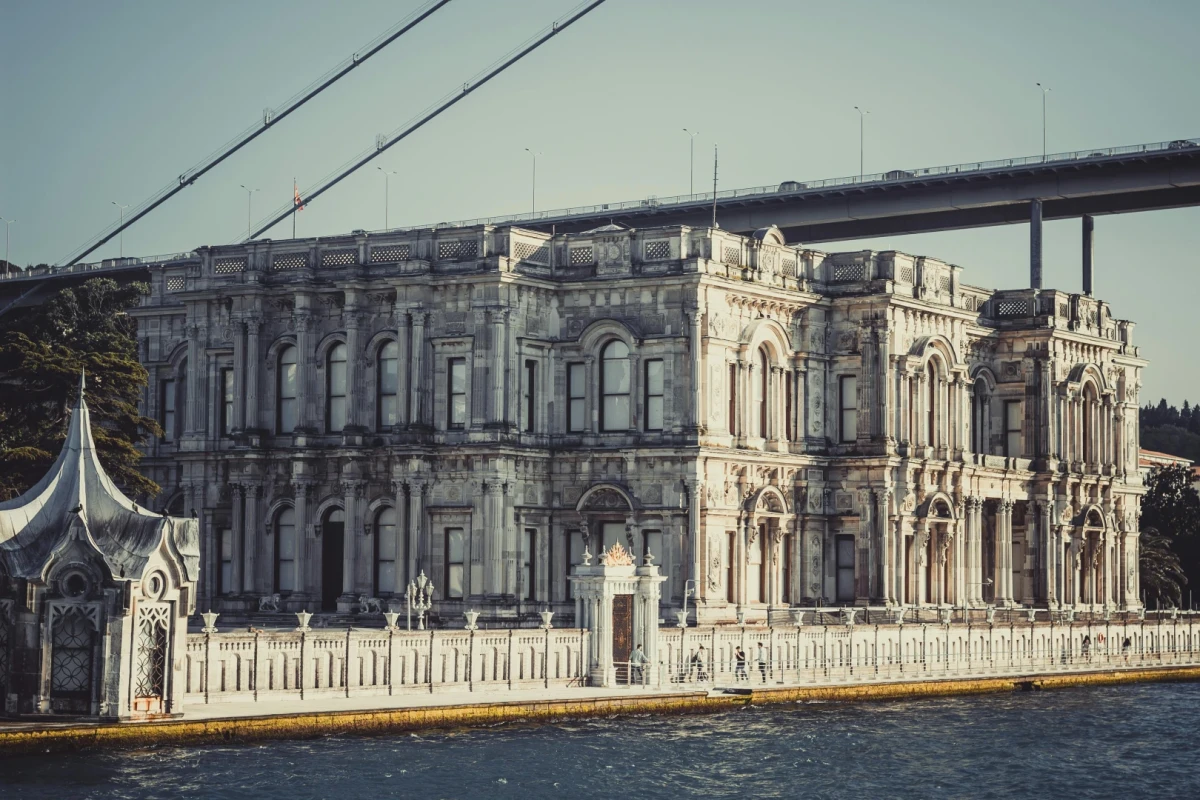

The Topkapı Palace has opened three historic areas to visitors for the first time ever. After years of restoration, you can now explore the Black Eunuchs' Ward, the Concubines' Courtyard, and a new gallery showcasing priceless İznik and Kütahya tiles. These newly accessible spaces reveal parts of Ottoman palace life that remained hidden for centuries and offer a completely new reason to visit Istanbul's most famous palace.
What are the New Sections at Topkapı Palace?
| Section | What You Can See | Opening Date |
| Concubines’ Courtyard and Kuşhane Kitchen | Harem life, bath culture and palace cuisine | June 2024 |
| Black Eunuchs’ Ward | Palace hierarchy, daily life and architecture | August 2025 |
| Mâbeyn Road Tile Gallery | Historic İznik and Kütahya tiles | December 2025 |
Why is the Black Eunuchs' Ward one of the most important new sections?
The Ward of Black Eunuchs (Karaağalar Koğuşu) is opening to the public for the first time in the palace’s history, 360 years after they were built. This structure took over 10 years to restore. It now shows everyday objects that give a glimpse into 16th-century palace life. These unique items from the Topkapı Palace collections show how people lived and what their daily routines were .
Wax figures recreate scenes from daily life, while period objects, wall paintings and archival photographs place the ward in its historical setting. The ward also includes items from the time, wall paintings, and archival images. These elements add rich historical context to the space. This building represents the common style of the Ottoman Classical period.
Who Were the Black Eunuchs?
The "black eunuchs" (karaağalar) who lived here were brought from North Africa, including Sudan, Somalia, and Ethiopia, to serve the Ottoman Palace harem. Castration was not allowed in the Ottoman Empire, so they were brought as slaves from these faraway areas outside the empire.
However, their status within the palace was far more significant than that of an “ordinary” slave. These eunuchs managed the daily operations of the harem. They held some of the highest positions in the Ottoman State Protocol. As they climbed the ranks, they gained power and amassed great fortunes and estates. The Chief Black Eunuch (Karaağalar Ağası) became one of the palace’s most influential officials. He supervised the Harem and played an important role in administering charitable endowments connected with Mecca and Medina, the Holy Sites of Islam.
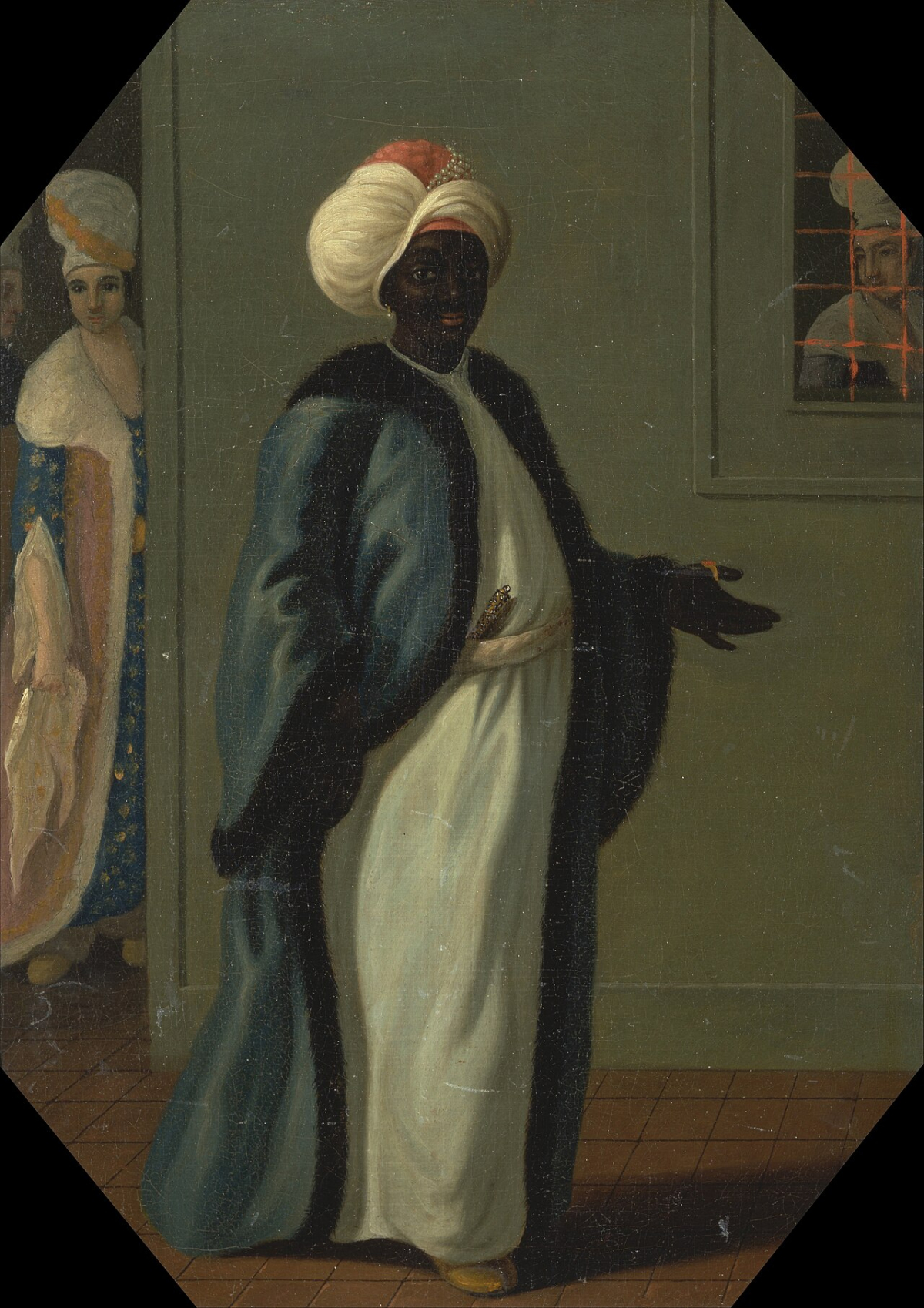
An oil painting of Chief of Black Eunuch's by Francis Smith in 18th century
How Did the Ward Reflect Palace Hierarchy?
This three-staged dormitory, one of the previously hidden spaces within Topkapı Palace, gives an idea about the architectural characteristics of the 17th century. These three stages show the Karaağalar’s position in state protocol and their duties within the Ottoman Palace. The dormitory section serves as a space for training and education of Black Eunuch, who came to the palace at a very young age. They first settle on the upper floor and then move down to the lower floors as they gain seniority.
This mysterious ward shows the structure of the Ottoman state administration and explains how different classes related to each other in the palace. By walking through the ward, visitors can better understand that the Harem was a highly organized institution with strict rules, ranks and responsibilities.
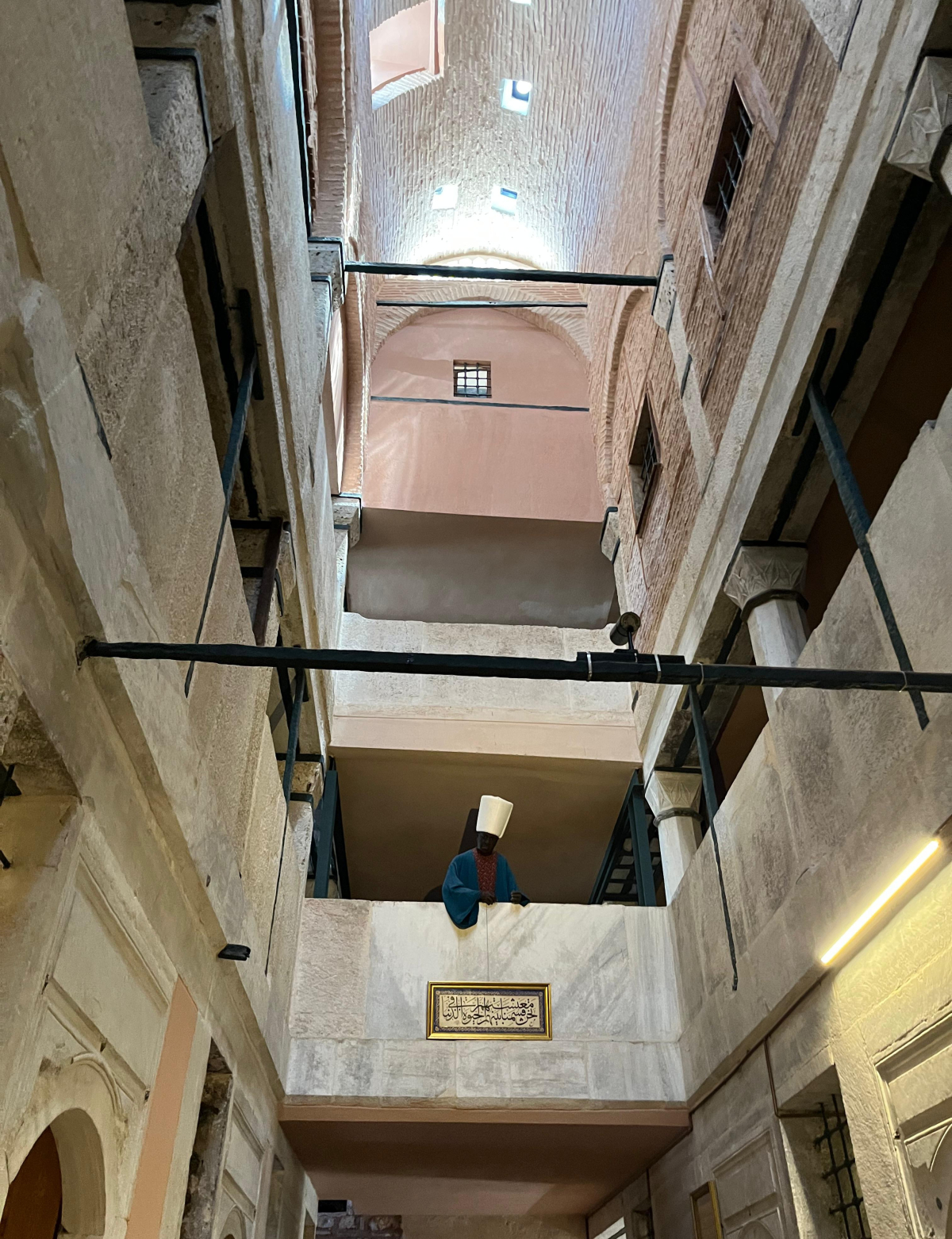
The three-staged ward with wax of a black eunuch (Photo: Sena Nur Albayrak)
What can visitors see inside the Concubines' Courtyard?
The Concubines’ Courtyard (Cariyeler Taşlığı) connects to the Harem. For the first time, it’s open to the public. Visitors can now explore the historic bathhouse and the Sultan's private Kuşhane Kitchen. This offers a fascinating glimpse into Ottoman daily life. Visitors can see realistic wax figures and rare cultural artifacts from the 16th century. In these sections, palace life is brought to life through wax figures that reflect the characteristic features of the era.
The new sections at Topkapı Palace, now restored, are significant for the Ottoman harem's history. The Concubines’ and Kadınefendi’s Courtyard is the harem’s smallest courtyard. It is surrounded by the quarters of the kadınefendis and concubines. Constructed in the mid-1500s, the Courtyard includes living spaces and essential areas like a hamam, laundry room, and pantry. The hamam, among the oldest parts of Topkapı Palace, has three sections: the cold room, warm room, and hot room. This bathhouse showcases nearly 120 artifacts that highlight the era and bath culture.
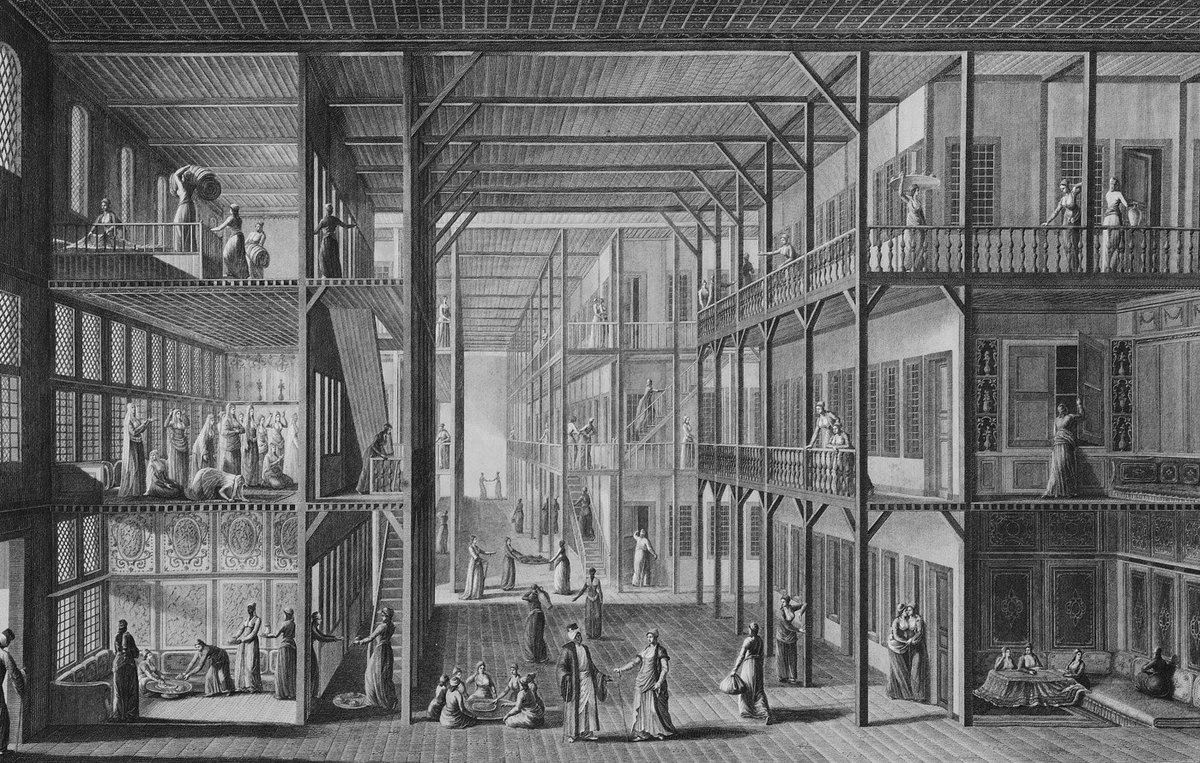
An engraving of Harem by Meiling, a French architect from 19th century
What Was the Kuşhane Kitchen Used For?
Another newly opened section in the Topkapı Palace Harem is the Kuşhane Kitchen. Located on the Golden Road, this kitchen used to prepare special meals for the sultans. In addition, meals to be served to the sultans are brought from the palace kitchen and served here, and this kitchen is also used when meals are needed at night. The Kuşhane Kitchen now welcomes visitors with a modern exhibit. It showcases items from the Topkapı Palace Collection, like tombak, silver, and copper pots and spoons.
Inside the kitchen, a silicone statue of a cook in period dress helps bring the space to life. Through these historical details and its focus on Ottoman culinary culture, the Kuşhane Kitchen is a must-see section of Topkapı Palace.
Why are the İznik tiles at Topkapı Palace so famous worldwide?
The final section is a special gallery housing Iznik and Kütahya tiles: symbols of the palace’s legendary wealth. The method used to create Iznik tiles remains a mystery to this day, yet they have retained their vibrant colors for over five hundred years.
Tiles define the palace's spirit; without them, the building would lose its historic charm. In Turkish, glazed architectural tiles are commonly called çini, a word historically associated with China and Chinese ceramics.
Tiles are truly valuable part of the National Palaces Collection, particularly at Topkapı Palace. Of course, the tiles here refer to those used decoratively in the various spaces. In this regard, Topkapı Palace boasts a particularly rich collection of tiles. These special tiles, which reflect the golden age of Turkish tile art, particularly during the palace’s construction and its 16th-century renovation, are among the top attractions that visitors should not miss.
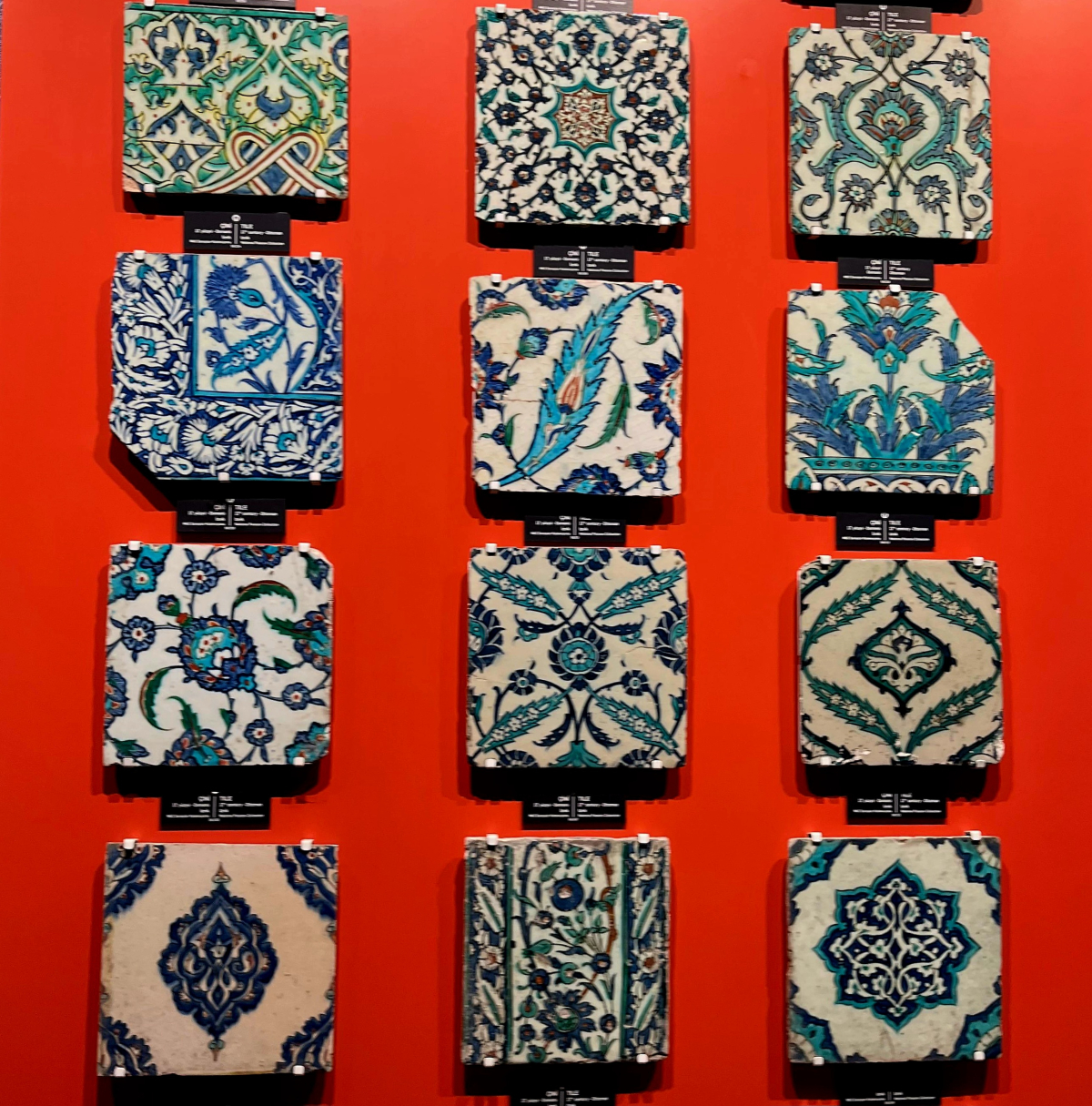
The Tiles Section in the Gallery (Photo: Sena Nur Albayrak)
Making a tile is a difficult process. These ceramic tiles are a type of ceramic produced by mixing raw materials such as quartz clay, glass powder (frit), dolomite, marl, and chalk dust in specific proportions, applying underglaze and overglaze decorations to them, and firing them at temperatures between 850 and 950 degrees. Artisans understand the basic production process, yet reproducing the luminosity, colours and technical consistency of the finest sixteenth-century İznik tiles are still impossible to produce .
What Can You See in the Mâbeyn Road Tile Gallery?
The Mabeyn Road Tile Gallery displays best examples of İznik and Kütahya ceramics from National Palaces Collection. Moreover, the corridor where it is displayed is no coincidence. This is Mabeyn Path, which connects the public and private part (Harem) of the palace. Mabeyn means “the between the two things”. Here, the tiles display their prominence in palace life. Tiles have always been part of the Ottoman palace culture, and the mosques. This is particularly more evident in Blue Mosque, with glamorous tiles inside.
Tips for Visiting Topkapı Palace New Sections
Before your visit, check out Topkapı Palace Museum website for current opening hours, admission prices, and temporary closures because of restoration. Also, you can take a look at our tips to navigate your visit below.
Are the New Sections Worth Visiting?
Short answer, yes. The new sections make the Harem easier to understand as a living and working institution rather than a collection of richly decorated rooms.
Each new space is a discovery of the palace life:
- The Black Eunuchs’ Ward explains education, service and hierarchy.
- The Concubines’ Courtyard reveals domestic life inside the Harem.
- The Kuşhane Kitchen introduces Ottoman palace cuisine.
- The Mâbeyn Road Gallery presents the artistic importance of İznik and Kütahya tiles.
Together, they provide a full picture of a real palace life for the people who lived and worked behind the palace walls.
Explore the New Topkapı Palace with Cogito Istanbul