
Süleymaniye Mosque

Published

06 May 2025

Süleymaniye Mosque: Where Majesty Meets Serenity in Istanbul

A First Encounter with a Timeless Masterpiece

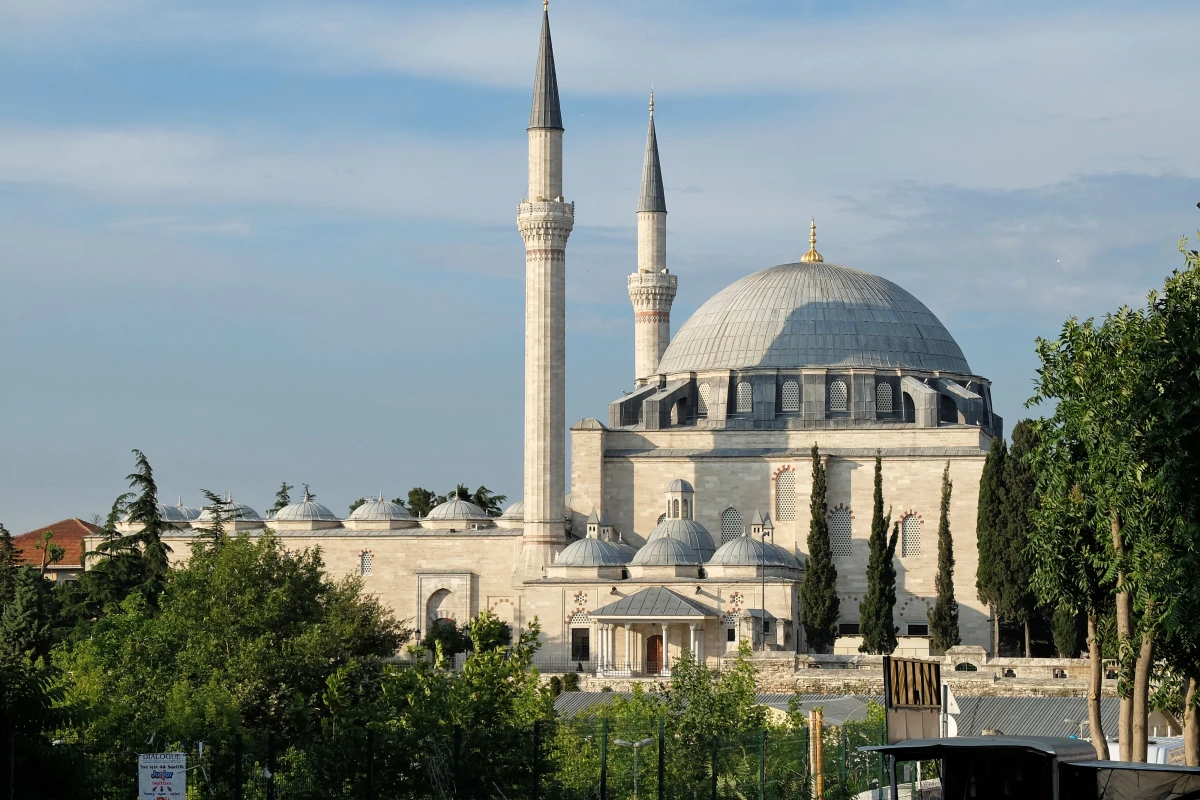
When you walk through the historic streets of Istanbul’s Fatih district, a majestic silhouette begins to emerge in the distance. Rising gracefully above the ancient city skyline is the Süleymaniye Mosque, one of the most iconic and architecturally refined monuments of the Ottoman Empire.

This isn’t just a religious structure—it’s a place where grandeur meets peace, where history whispers through every column, and where Istanbul’s skyline finds one of its proudest crowns.
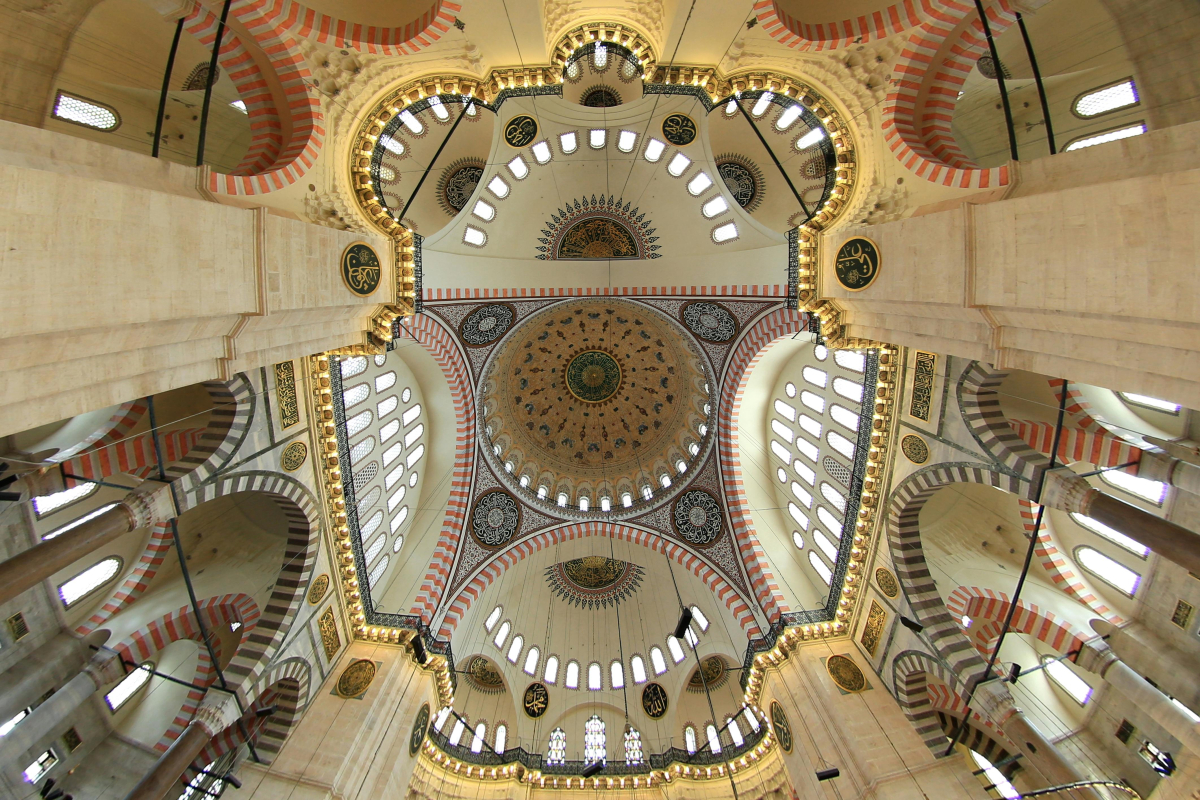
Ceiling of Süleymaniye Mosque IstanbulCeiling of Süleymaniye Mosque

Commissioned by Sultan Süleyman the Magnificent—the most powerful and culturally sophisticated sultan of the Ottoman Empire—and designed by Mimar Sinan, the most brilliant architect in the empire’s history, the mosque was completed in 1557. It is widely considered one of Sinan’s defining works.

Even before entering the mosque, the approach is striking. The large outer courtyard, framed by marble colonnades and centered around a serene fountain, invites visitors into a quiet, almost meditative space. It offers a moment of calm before you even cross the threshold into the prayer hall. Though you are just minutes away from the Grand Bazaar’s chaos, here everything slows down.
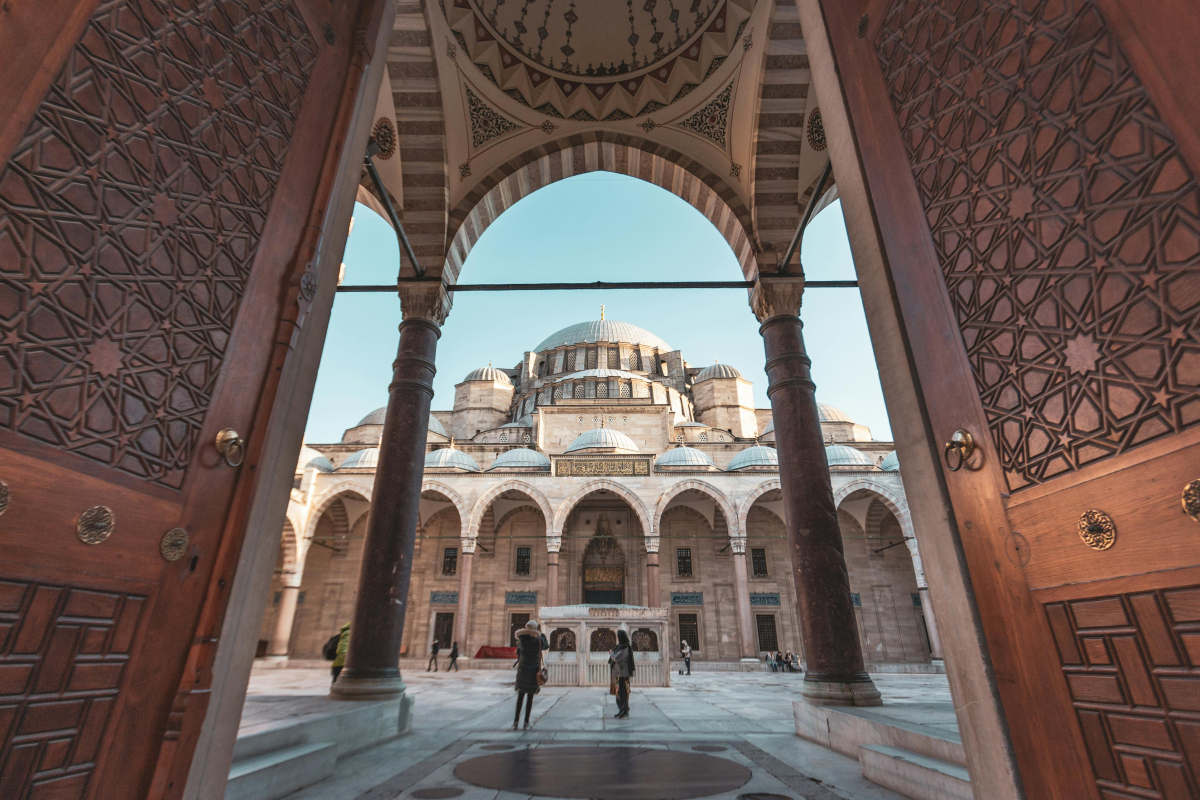
Suleymaniye Mosque Courtyard IstanbulSuleymaniye Mosque Courtyard

A Place of Stillness and Beauty in Istanbul

Stepping inside the Süleymaniye Mosque is a deeply moving experience, even for those not of the Muslim faith. The main dome, which rises to a height of 53 meters, is flanked by elegant semi-domes, and the entire interior is bathed in natural light streaming through hundreds of windows.

Soft rays illuminate the Iznik tile motifs, painted medallions, and Arabic calligraphy that decorate the walls and ceilings. Light and space seem to work together here, creating a unique feeling of openness and peace.

Even when the mosque is filled with visitors or worshippers, it remains remarkably quiet and tranquil. The acoustics have been perfected to distribute sound without echo, so you hear the imam clearly during prayers, or the soft shuffle of feet when touring. The floral patterns, the absence of heavy ornamentation, and the balance of light and shadow make the space feel alive but not loud.

This is more than a place of worship—it's a celebration of balance, humility, and spiritual depth.

🛠️ The Genius of Mimar Sinan

🔹 Architect: Mimar Sinan
🔹 Dome Height: 53 meters
🔹 Acoustic Feature: Clay pots embedded in the dome to enhance sound clarity
🔹 Ventilation Innovation: Smoke from oil lamps was filtered and collected to make imperial ink

Mimar Sinan didn’t just build stunning monuments—he solved complex engineering problems long before modern technology existed. His design at Süleymaniye proves that aesthetic elegance can go hand-in-hand with technical genius.

The ventilation system not only protected the mosque from soot damage but also symbolized how nothing was wasted—even the smoke became useful. The structural balance of the building also ensures that it withstands Istanbul’s frequent earthquakes, thanks to ingenious stress-distribution techniques.

Sinan himself is buried near the mosque, in a modest tomb—an unassuming resting place for a man whose architecture shaped centuries.

🏛️ More Than a Mosque: The Külliye Complex of Süleymaniye

The Süleymaniye Mosque was built not as a standalone monument, but as the centerpiece of a külliye, or multi-functional complex designed to serve both spiritual and social needs. The surrounding buildings once included:

🏥 A hospital for the sick
🍲 An imaret (soup kitchen) feeding the poor
📚 Madrasahs (religious schools) and a rich library
🛁 Public baths (hamam) for hygiene and socializing
🌳 A graveyard, which houses the tombs of Sultan Süleyman and Hürrem Sultan, his influential wife

This complex reflected the Ottoman view of the mosque not just as a house of prayer, but as a center of community, care, and learning.

Behind the mosque, you’ll find a lush garden terrace offering postcard-worthy views of the Bosphorus, the Golden Horn, and Galata Tower. Few places in the city provide such a peaceful yet panoramic perspective.
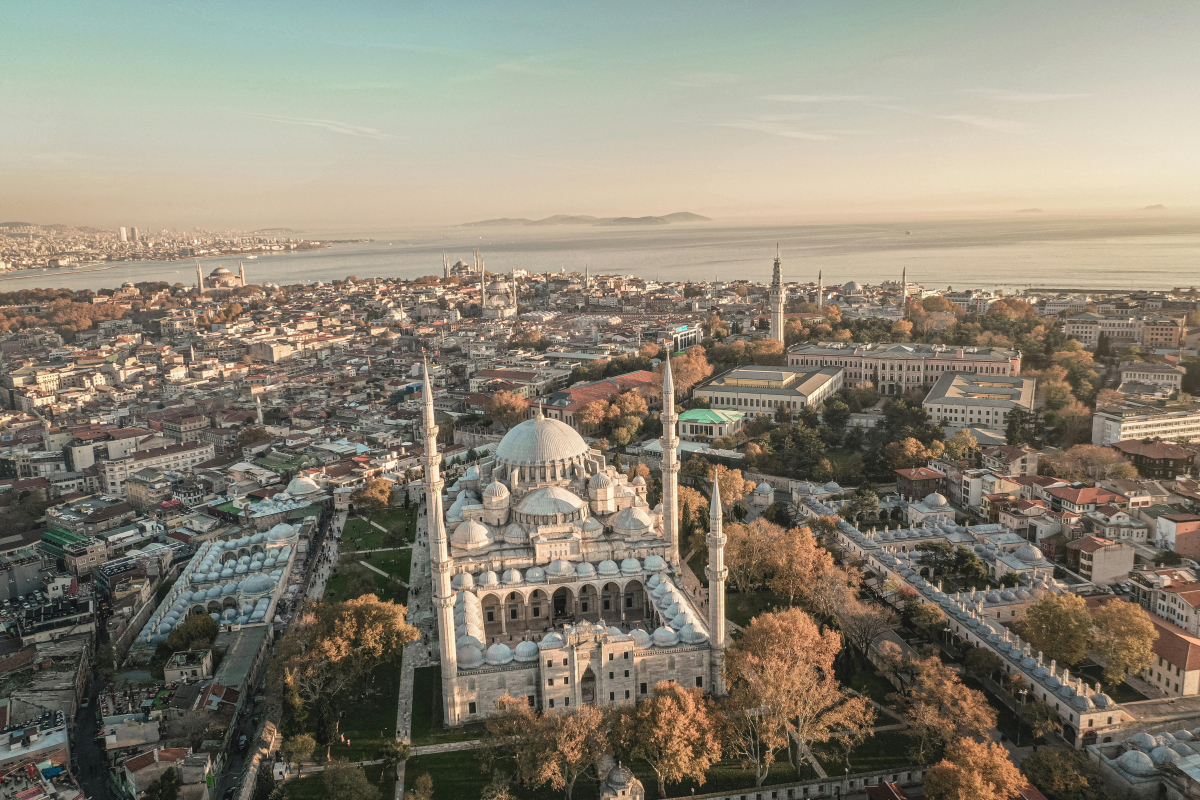
Suleymaniye Mosque Aerial IstanbulAerial View of Süleymaniye Mosque


📸 Don’t Miss This View of Istanbul

Perched on one of Istanbul’s seven hills, Süleymaniye offers a spectacular view of the city’s waterlines and rooftops. It’s a favorite for photographers and quiet wanderers alike. Come at sunset, and you’ll see the domes turn gold as the call to prayer echoes across the hills—a moment that stays with you long after you leave.
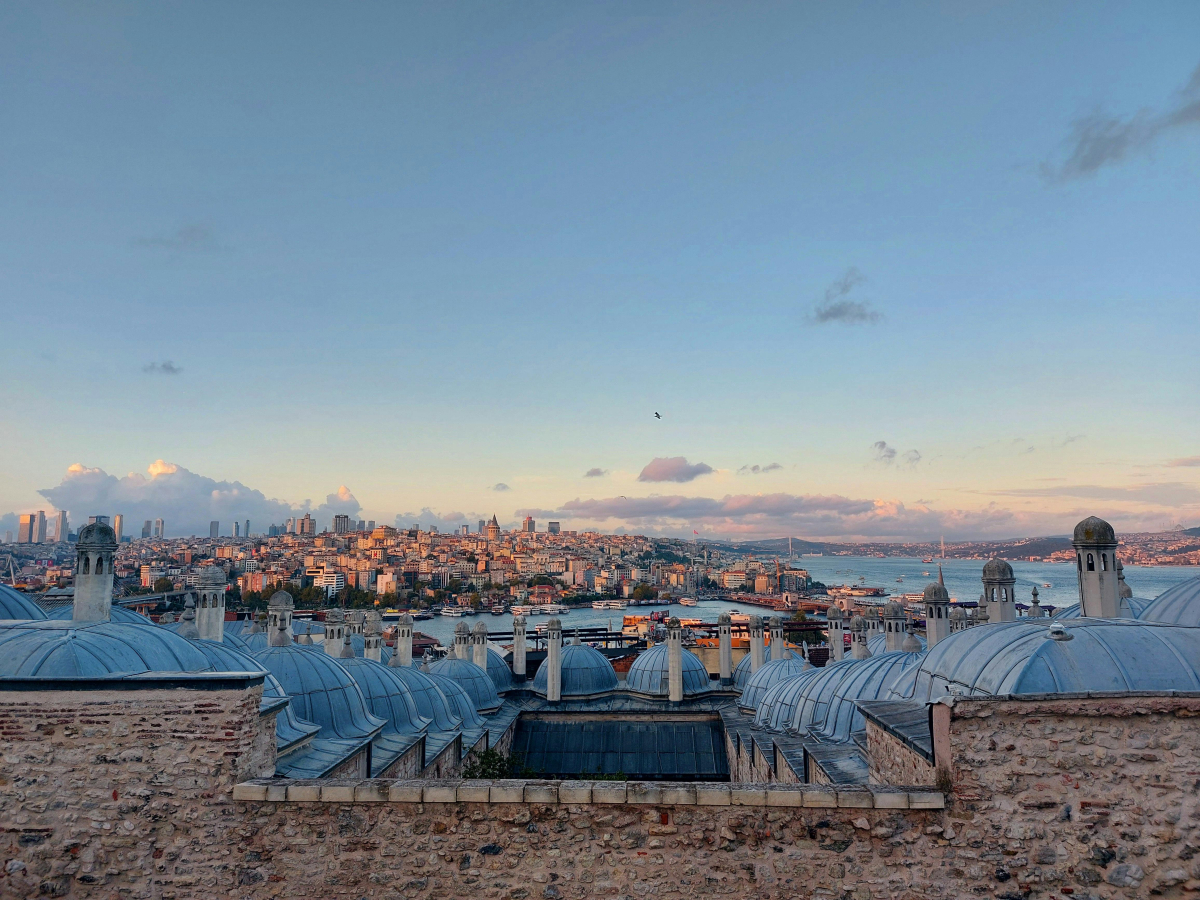
View of Bosphorus from SüleymaniyeView of Beyoğlu, Golden Horn and Bosphorus from Süleymaniye


📌 Practical Information for Visitors

ℹ️ Information 🕒 Details
📍 Location Süleymaniye Mahallesi, Fatih, Istanbul
🚇 Closest Tram Station Beyazıt-Kapalıçarşı (10–15 min walk uphill)
🕰️ Visiting Hours Open daily, outside of prayer times
💸 Entrance Fee Free (Donations welcome)
🧕 Dress Code Modest attire required. Women should cover hair.
📷 Photography Allowed (no flash, respectful behavior required)
Nearby Cafés Try Süleymaniye Çikolatacısı or Mimar Sinan Teras Kafe
 

🧭 Insider Tips

🧣 Bring a scarf or shawl if you’re a woman visiting the mosque.
🧦 You’ll be asked to remove your shoes before entering—socks are helpful.
🕊️ Visit in the early morning or around sunset for the most peaceful atmosphere.
🗺️ Don’t miss the courtyard, tombs, and the Tomb of Mimar Sinan, just a short walk away.


💬 Final Thoughts

The Süleymaniye Mosque is far more than just an architectural gem. It is a living testament to the vision of an empire, the genius of a master architect, and the spirit of a city that spans continents and centuries.

Whether you come for the history, the silence, or the skyline—this place will leave you changed in the quietest of ways.

If your time in Istanbul is short and you can only choose one mosque to explore, let it be Süleymaniye.
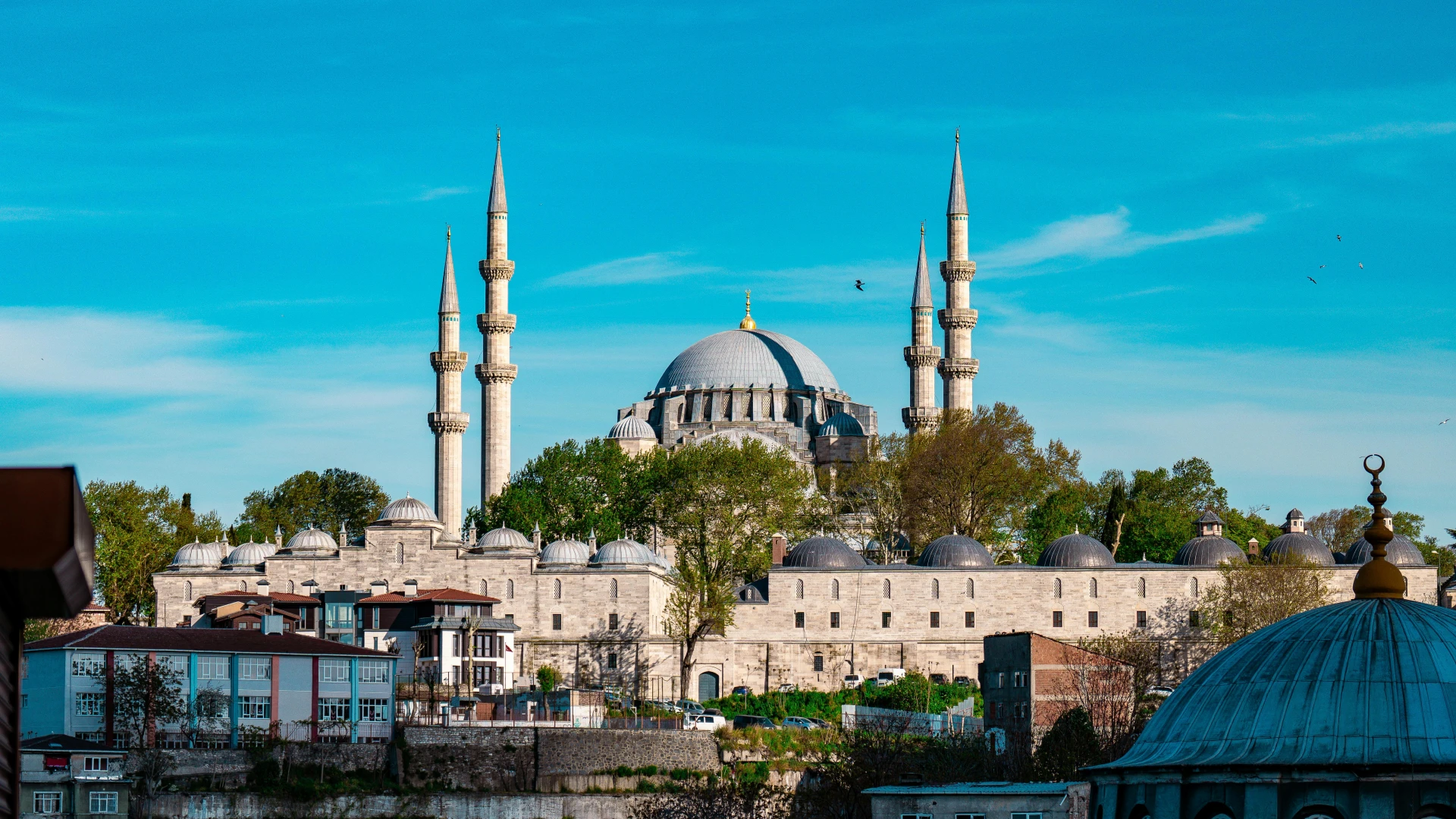
Location Details

Suleymaniye Mosque

Süleymaniye, Prof. Sıddık Sami Onar Cd. No:1, 34116 Fatih/İstanbul, Türkiye

<p style="-webkit-text-stroke-width:0px;caret-color:rgb(0, 0, 0);color:rgb(0, 0, 0);font-style:normal;font-variant-caps:normal;font-weight:400;letter-spacing:normal;orphans:2;text-align:start;text-decoration-line:none;text-decoration-style:solid;text-decoration-thickness:auto;text-indent:0px;text-transform:none;white-space:normal;widows:2;word-spacing:0px;">The Süleymaniye Mosque is the Istanbul's largest imperial mosque designed as &nbsp;Mimar Sinan's greatest masterpiece. Built in the 16th century for Sultan Süleyman the Magnificent, the mosque crowns one of the city's seven hills and overlooks the Golden Horn, the Bosphorus and the historic peninsula. Unlike many famous landmarks, Süleymaniye rarely feels crowded, giving visitors the chance to experience one of the greatest works of Islamic architecture in a peaceful setting.</p><p style="-webkit-text-stroke-width:0px;caret-color:rgb(0, 0, 0);color:rgb(0, 0, 0);font-style:normal;font-variant-caps:normal;font-weight:400;letter-spacing:normal;orphans:2;text-align:start;text-decoration-line:none;text-decoration-style:solid;text-decoration-thickness:auto;text-indent:0px;text-transform:none;white-space:normal;widows:2;word-spacing:0px;">Long before construction began, the Ottomans considered building Topkapı Palace on this hill. They abandoned the idea after earthquakes revealed the site's unstable ground. Sultan Süleyman still wanted to build something worthy of the empire, but it required an architect who could overcome the challenge. Only one man possessed the knowledge and confidence to do it: Mimar Sinan, the chief imperial architect and engineering genius of the Ottoman Empire.</p><p style="-webkit-text-stroke-width:0px;caret-color:rgb(0, 0, 0);color:rgb(0, 0, 0);font-style:normal;font-variant-caps:normal;font-weight:400;letter-spacing:normal;orphans:2;text-align:start;text-decoration-line:none;text-decoration-style:solid;text-decoration-thickness:auto;text-indent:0px;text-transform:none;white-space:normal;widows:2;word-spacing:0px;">Sinan transformed the difficult terrain into one of Istanbul's most stable monuments. More than four and a half centuries later, the mosque still stands almost exactly as he designed it. According to Ottoman tradition, Sultan Süleyman challenged his architect with a simple request: "<i>Build me a mosque that will stand until the Day of Judgment</i>." Whether legend or history, the building itself speaks for Sinan's remarkable achievement.</p><p style="-webkit-text-stroke-width:0px;caret-color:rgb(0, 0, 0);color:rgb(0, 0, 0);font-style:normal;font-variant-caps:normal;font-weight:400;letter-spacing:normal;orphans:2;text-align:start;text-decoration-line:none;text-decoration-style:solid;text-decoration-thickness:auto;text-indent:0px;text-transform:none;white-space:normal;widows:2;word-spacing:0px;">Süleymaniye also reflects the Ottoman understanding of urban planning. Rather than constructing a single mosque, Sinan designed an entire külliye, or mosque complex, around it. Schools, a hospital, kitchens, baths, a caravanserai and charitable institutions once surrounded the mosque, creating a self-sufficient centre for education, healthcare and social welfare. For the Ottomans, a mosque served not only as a place of prayer but also as the heart of community life.</p><p style="-webkit-text-stroke-width:0px;caret-color:rgb(0, 0, 0);color:rgb(0, 0, 0);font-style:normal;font-variant-caps:normal;font-weight:400;letter-spacing:normal;orphans:2;text-align:start;text-decoration-line:none;text-decoration-style:solid;text-decoration-thickness:auto;text-indent:0px;text-transform:none;white-space:normal;widows:2;word-spacing:0px;">Its location plays an equally important role. Stand in the courtyard and you'll understand why Sinan chose this hill. The panoramic view stretches across the Golden Horn, the Bosphorus and the old city, linking the mosque visually with the rest of imperial Istanbul. Sinan carefully positioned the building to become part of the city's skyline rather than dominate it. The mosque feels as though it naturally rises from the hill beneath it.</p><p style="-webkit-text-stroke-width:0px;caret-color:rgb(0, 0, 0);color:rgb(0, 0, 0);font-style:normal;font-variant-caps:normal;font-weight:400;letter-spacing:normal;orphans:2;text-align:start;text-decoration-line:none;text-decoration-style:solid;text-decoration-thickness:auto;text-indent:0px;text-transform:none;white-space:normal;widows:2;word-spacing:0px;">Look up at the four slender minarets. They identify Süleymaniye as a Selatin Mosque, an imperial mosque commissioned by a reigning sultan. Count the balconies, known as şerefes, and you'll find ten in total. They commemorate Sultan Süleyman as the tenth Ottoman sultan, turning the mosque itself into a symbol of dynastic power.</p><p style="-webkit-text-stroke-width:0px;caret-color:rgb(0, 0, 0);color:rgb(0, 0, 0);font-style:normal;font-variant-caps:normal;font-weight:400;letter-spacing:normal;orphans:2;text-align:start;text-decoration-line:none;text-decoration-style:solid;text-decoration-thickness:auto;text-indent:0px;text-transform:none;white-space:normal;widows:2;word-spacing:0px;">Step inside and notice something unexpected. Despite its enormous size, the prayer hall feels bright, open and remarkably calm. Four massive piers, often called elephant feet because of their size, support the central dome. Sinan integrated these huge structural elements so naturally that they never overwhelm the space. Instead, they help create the balance and openness that define classical Ottoman architecture.</p><p style="-webkit-text-stroke-width:0px;caret-color:rgb(0, 0, 0);color:rgb(0, 0, 0);font-style:normal;font-variant-caps:normal;font-weight:400;letter-spacing:normal;orphans:2;text-align:start;text-decoration-line:none;text-decoration-style:solid;text-decoration-thickness:auto;text-indent:0px;text-transform:none;white-space:normal;widows:2;word-spacing:0px;">Don't miss the mihrab, which indicates the direction of Mecca, or the finely carved minbar, where the imam delivers the Friday sermon. Before leaving, pause beneath the entrance portal and look closely at the muqarnas carvings above the doorway. These honeycomb-like stone decorations demonstrate the extraordinary craftsmanship of Ottoman stonemasons and mark the transition from the outside world into a sacred space.</p><p style="-webkit-text-stroke-width:0px;caret-color:rgb(0, 0, 0);color:rgb(0, 0, 0);font-style:normal;font-variant-caps:normal;font-weight:400;letter-spacing:normal;orphans:2;text-align:start;text-decoration-line:none;text-decoration-style:solid;text-decoration-thickness:auto;text-indent:0px;text-transform:none;white-space:normal;widows:2;word-spacing:0px;">Süleymaniye also tells the story of an empire that stretched across three continents. Builders transported precious materials from every corner of the Ottoman world. Pink granite columns arrived from Alexandria and Baalbek, reflecting both the empire's vast reach and its ability to gather the finest materials for its most important monuments.</p><p style="-webkit-text-stroke-width:0px;caret-color:rgb(0, 0, 0);color:rgb(0, 0, 0);font-style:normal;font-variant-caps:normal;font-weight:400;letter-spacing:normal;orphans:2;text-align:start;text-decoration-line:none;text-decoration-style:solid;text-decoration-thickness:auto;text-indent:0px;text-transform:none;white-space:normal;widows:2;word-spacing:0px;">Many visitors come expecting another beautiful mosque. They leave having discovered something much greater: the building that best reveals Mimar Sinan's vision. Here, architecture, engineering, urban planning and imperial ambition come together in perfect balance. More than 450 years after its completion, Süleymaniye remains one of the finest expressions of Ottoman civilization and one of the most rewarding places to experience the silhouette of Istanbul.</p>