

Basilica Cistern
Alemdar, Yerebatan Cd. 1/3, 34110 Fatih/İstanbul
The Basilica Cistern is Istanbul’s hidden water memory: a Byzantine survival machine, built with recycled Roman grandeur, rediscovered through local houses, and transformed today into one of the city’s most atmospheric museum spaces.
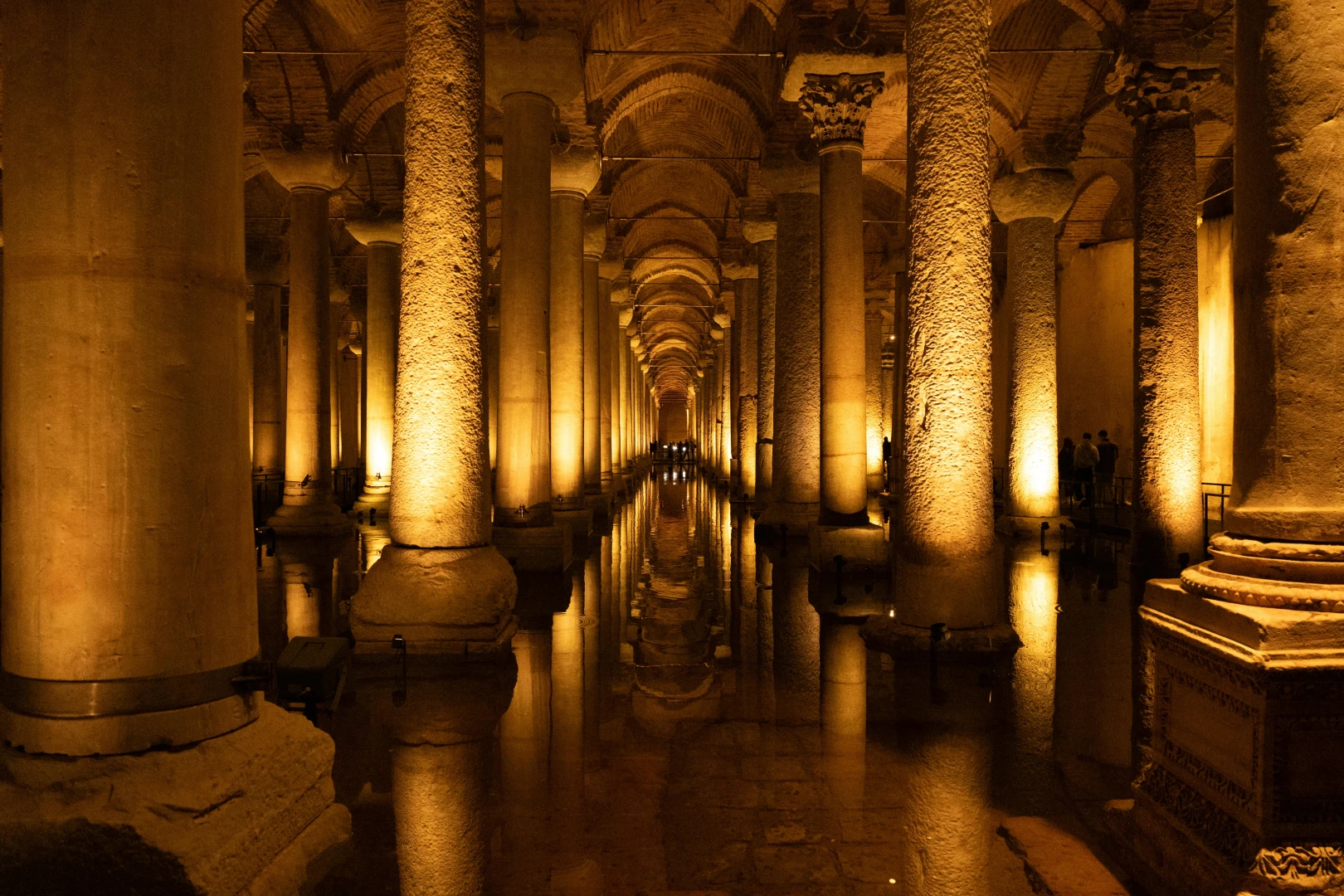
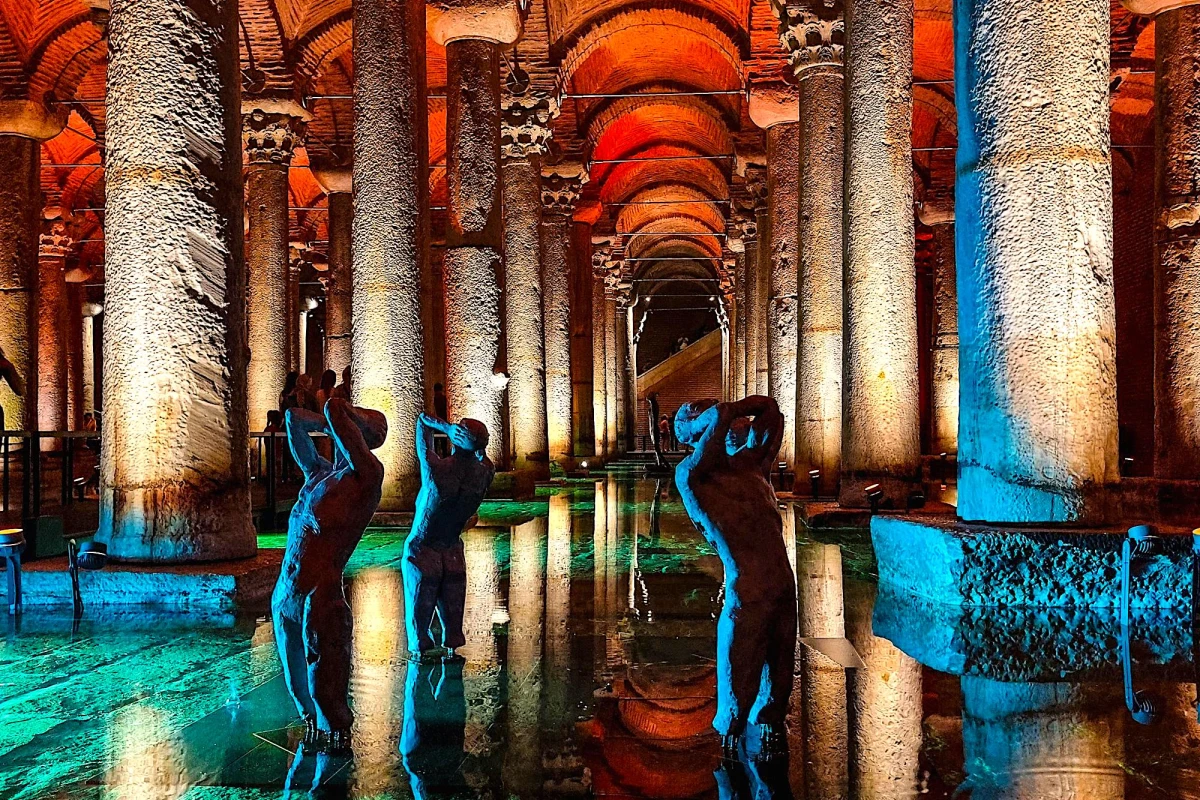
Locals call it Yerebatan Sarayı, the “Sunken Palace.” The name makes sense the moment you enter. More than three hundred columns stand in rows, lit by soft light and mirrored by shallow water. Yet this was never a palace. No sultan lived here. No emperor received guests here. The cistern was built for something more essential: water.
In Byzantine Constantinople, water meant power. The city stood at the center of empire, but it did not have enough fresh local water to support its palaces, churches, baths, gardens, and crowded neighborhoods. So the Byzantines created a vast water network of aqueducts, channels, and cisterns. The Basilica Cistern formed part of that hidden system. It stored water for the imperial district near Hagia Sophia and the Great Palace, helping the city endure daily life, dry seasons, and survival in wartimes particularly for droughts.
The basilica's charm comes from a kind of accident. Byzantine builders did not design this space as a museum or a romantic ruin. They built it as infrastructure. But they also built it with ambition. The long rows of columns give the cistern rhythm and drama. The water doubles the architecture. The darkness makes every detail feel deliberate. Practical engineering turns into theatre and a state-of-art facility .
Look closely at the columns. They do not all match. Some capitals look plain, others more decorative. Some shafts feel heavier or older. This is one of the cistern’s most revealing details. Many pieces came from earlier Roman buildings and monuments. Instead of carving everything from scratch, builders reused existing stone. In Istanbul, history often works like this: one empire does not erase the last one. It builds with its remains.
That brings you to the cistern’s most famous residents: the Medusa heads. You will find them at the base of two columns, one placed sideways, the other upside down. Many stories try to explain them. Some say the builders turned Medusa’s head to weaken her power. Others connect her to ancient protection myths. The truth may be simpler and more interesting. These blocks likely came from an older Roman monument, then found a second life here as column bases. Practical reuse created mystery, and the city did the rest.
The Basilica Cistern also carries a strange Ottoman-era memory. Centuries after Byzantine rule ended, the cistern lost its original role. Yet it did not vanish completely. In the 1500s, the French traveler Pierre Gilles heard that people living nearby could lower buckets through holes in their floors and draw water from below. Some even caught fish there. Imagine that: ordinary houses standing above this vast underground space, with residents touching a forgotten piece of Byzantium from their basements.
Today, the cistern works differently again. After major restoration, it has become one of Istanbul’s most atmospheric museum spaces.
Local Guides Available for Guided Services Here
Tuğçe U.
Doruk S.
Quiet yet powerful echoes of Roman engineering
Discover another layer of Istanbul from Justinianus period with 336 Roman columns.
Related Contents
Reviews

No Reviews Yet
Be the first to review this location!

It is a unique Roman heritage of the city